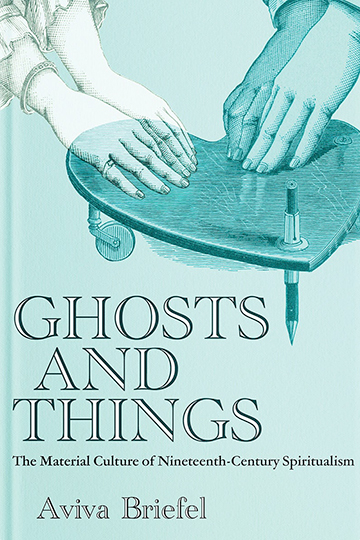
- Publisher: Cornell University Press
- Available in: Hardcover, eBook
- ISBN: 9781501780264
- Published: April 15, 2025
Ghosts and Things argues that Victorians turned to the dead to understand the material culture of their present. With the rise of spiritualism in Britain in the early 1850s, séances invited participants to contact ghosts using material things, from ordinary household furniture to specialized technologies invented to register the presence of spirits. In its supernatural object lessons, Victorian spiritualism was not just a mystical movement centered on the dead but also a practical resource for learning how to negotiate the uncanniness of life under capitalism.
Aviva Briefel explores how spiritualism compelled séance participants to speculate on the manufacture of spectral clothing; ponder the hidden histories and energies of parlor furniture; confront the humiliations of consumerism as summoned spirits pelted them with exotic fruits; and comprehend modes of mechanical reproduction, like photography and electrotyping, that had the power to shape identities. Briefel argues that spiritualist practices and the objects they employed offered both believers and skeptics unexpected frameworks for grappling with the often-invisible forces of labor, consumption, exploitation, and exchange that haunted their everyday lives.
Ghosts and Things reveals how spiritualism’s explorations of the borderland between life and death, matter and spirit, produced a strange and seductive combination of wonder and discomfort that allowed participants to experience the possibilities and precarities of industrial modernity in novel ways.
Reviews
Ghosts and Things is a brilliant, lively, and important book that will fundamentally change how Victorian studies and material culture studies understand the relationship between the spiritualist craze in the second half of the nineteenth century and the pleasures, anxieties, and oppressions of industrial capitalist culture.
-Renée Fox, author of The Necromantics
Ghosts and Things is a meticulously researched, persuasively argued account of the role that tangible objects—tables, cabinets, flowers, food, clothes—played in both nineteenth-century spiritualist practices and ensuing debates about ghosts, mediums, and life after death. Indeed, Aviva Briefel’s page-turner of a cultural history achieves the very effect that the séances it describes were striving for, by making figures (and conceptual figurations) of the shadowy past come sharply and viscerally to life.
-Nora Gilbert, author of Gone Girls, 1684–1901